Join us in signing onto this petition to Legalize Kelp Farming in our Bays .
Dear Senators Kaminsky and Stec, Chair and Ranking Member of the Senate Environmental Conservation Committee, and Assemblymen Englebright and Smullen, Chair and Ranking Member of the Assembly Committee on Environmental Conservation,
We write to ask that you support the advancement from Committee of Senate Bill S4028 (A4213 in the Assembly), also known as “The Kelp Bill,” sponsored by Senator Anthony H. Palumbo and Assemblyman Fred W. Thiele, Jr.
The bill adds “and seaweed” to an existing statute that allows shellfish farming in the Peconic and Gardiners’ Bays. This would open a valuable economic opportunity for further developing the ‘blue economy’ in this time of recession. Passage of this bill will have immediate benefits for local kelp farmers, who planted a crop for a three-year Stony Brook University feasibility study but are presently unable to harvest and sell their kelp without a legal framework applicable to their industry.
Exploratory kelp farming projects in the area have already made steady and promising advances. The Stony Brook University study mentioned above was conducted with input from GreenWave, a Connecticut-based organization and international leader in the regenerative ocean farming industry. This study established the potential for seaweed farming to bring a broad spectrum of benefits to the people, the economy and the coastal ecosystems of the East End, while also contributing to climate change mitigation through the absorption of excess carbon. This work lays the foundation for a regenerative industry to emerge around kelp as a new crop in eastern Suffolk County.
Notably, this is a non-partisan issue: the bill received unanimous support from the Department of Environment’s Marine Resources Advisory Council in 2018 – an unusual rallying point for a group that rarely votes 10-0.
In light of the wide range of benefits that kelp farming will provide, and the bi-partisan support, we urge you to advance The Kelp Bill and to support its passage in the Senate and Assembly.
Thank you for your leadership and consideration.
Dr. Ayana Elizabeth Johnson
Founder and CEO, Ocean Collective
Scott Bluedorn
East Hampton Energy Sustainability Committee
Kate Rossi-Snook
Environmental Advocate, Concerned Citizens of Montauk
Mary Morgan
Cofounder, Drawdown East End
Diane Shapiro
Ambassador, Drawdown East End
Sean Barrett
Cofounder, Dock to Dish Montauk
Jenny Willis
Climate Activist, Eat More Kelp
Chef Trevor Swope
Climate Activist
Kim Knoll
Concerned Citizen
Cassia Patel
Cofounder, Oceanic Global
Lea d’Auriol
Cofounder, Oceanic Global
Peter Strugatz
Concerned Citizen
Chef Kerry Heffernan
Grand Banks, Pilot Brooklyn, Island Oyster, Drift In Restaurants, NYC
Postscript
If we want to save what’s left, from our pristine waters to our local economy, we have to accelerate our regenerative engagement with Nature.
We need a new paradigm
We need a new paradigm for doing business while ensuring the maintenance of biodiversity and its values, says the International Union for Conservation of Nature.
What is the blue-green economy?
A combination of the green economy, with strategies that focus on energy, transport, agriculture and forestry, and the blue economy, which focuses on fisheries and marine and coastal resources, says the UK Commonwealth Foundation .
Kelp is a Drawdown Solution
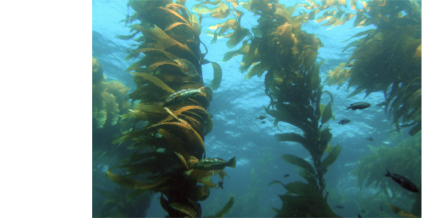
Kelp forests are the basis and habitat for vibrant ocean ecosystems. With the potential to grow up to half a meter a day, kelp is also an excellent means of sequestering carbon as it grows, with enormous carbon sequestration potential.
Seaweed, like land plants, use photosynthesis to turn carbon dioxide (CO2) into seaweed biomass (carbon sequestration) and release oxygen. Seaweed grows very fast so it can intake CO2 at a phenomenal rate. The CO2 is locked up in seaweed biomass and the seaweed can be harvested for use, or, it can sink to the seafloor or become stored under the sea floor (similar to soil sequestration). For more, check out this article by a marine ecologist Seaweed is About to Blow Your Climate Mind and her highlight of the Port of San Diego’s Blue Economy Incubator to support emerging aquaculture and blue technology businesses.
Project Drawdown has assessed a very limited selection of coastal and ocean solutions to date. This solution set will expand in the future (e.g., solutions for regenerative ocean farming and marine ecosystem restoration).
Sugar Kelp is Local
Local sugar kelp (latissima saccharina) is native to our waters, is an extremely beneficial habitat for marine and mitigates against harmful algal blooms. As a commercial product, Sugar kelp is superfood, a thickening agent, a soil fertilizer, and has biofuel and bioplastic applications. Growing kelp, i.e. marine permaculture, can help regenerate our waters and provide sustainable local financial and health returns. Let’s grow, use and eat more kelp!